On this page
MEDIEVAL MASTIC VILLAGE · CHIOS

Meet Kalamoti.

Kalamoti’s stone lanes connect its medieval past with everyday life. Meet the people, explore the houses and discover the landmarks of a living village.

Choose your village walk Circular walks from Platsa
A stone alley with an arch and flower pots in Kalamoti village, ChiosLook closer ↗
A lane in Kalamoti · Ailinaleixo · CC BY-SA 3.0
YOUR FIRST VISIT

Your first village walk.

Start at Platsa. The guide keeps your route, numbered stops and village stories together.

YOUR VILLAGE LOOP

Lanes & two churches

≈ 550 m · 30–45 minutes with pauses

A shorter loop through the lanes and two churches, with time for coffee back in the centre.

Start & finish: outside Platsa café

Open map & first stop →
See the stops in order 3 stops + return
  1. Platsa · start

    Begin with the houses around the centre. Look for the passages that connect them.

  2. Saint Konstantinos

    Look up at the bell tower, then see how the church fits among the roofs and lanes.

  3. Kato Panagia

    Notice the church among the houses. An interior visit is optional; ask locally about entry.

  4. Back at Platsa

    Look at the centre again. What do you notice now that you missed at the start?

SUGGESTED FOR YOUR FIRST VISIT

The village in one loop

≈ 1.2 km · 50–70 minutes with pauses

Follow the lanes, pause at the memorial and two churches, and return to Platsa. Read each stop’s story as you go.

Start & finish: outside Platsa café

Open map & first stop →
See the stops in order 4 stops + return
  1. Platsa · start

    Begin with the houses around the centre. Look for the passages that connect them.

  2. Tombros memorial

    Pause by the memorial beside the school: a different chapter of the village’s shared life.

  3. Saint Konstantinos

    Look up at the bell tower, then see how the church fits among the roofs and lanes.

  4. Kato Panagia

    Notice the church among the houses. An interior visit is optional; ask locally about entry.

  5. Back at Platsa

    Look at the centre again. What do you notice now that you missed at the start?

YOUR VILLAGE LOOP

Five churches, five pauses

≈ 970 m · 60–90 minutes with pauses

Five churches, their different dedications and the community stories behind them, in a loop from Platsa.

Start & finish: outside Platsa café

Open map & first stop →
See the stops in order 6 stops + return
  1. Platsa · start

    Begin with the houses around the centre. Look for the passages that connect them.

  2. Pano Panagia

    Keep its dedication to the Dormition in mind when you reach Kato Panagia later.

  3. Kato Panagia

    Notice the church among the houses. An interior visit is optional; ask locally about entry.

  4. Saint Konstantinos

    Look up at the bell tower, then see how the church fits among the roofs and lanes.

  5. Agia Kyriaki

    Read about the shared care behind a village church, beyond its building alone.

  6. Agia Paraskevi

    Meet the village church’s community story before the short return to the centre.

  7. Back at Platsa

    Look at the centre again. What do you notice now that you missed at the start?

Before you set off

All three loops start outside Platsa café. Times include pauses and are planning estimates. Expect uneven paving and possible steps; the walks use church exteriors.

Compare every route, including countryside walks →
GET TO KNOW YOUR SURROUNDINGS

Small distances. Many stories.

Choose architecture, churches or people’s stories. Each place offers a story to read and a detail to notice when you visit.

The place guides below are available without a map.

10 VILLAGE LANDMARKS

Kalamoti

A living medieval village, where stone lanes and quiet squares open onto the fertile landscape of southern Chios.

Read the place guide →
What to notice here

From the square, choose one lane and follow the way houses meet above and beside it. Where does the street feel open, and where does it become a passage?

Keep exploring this subject
Walking directions in Google Maps ↗

Pins are place references, not verified entrances or a route. Streets and buildings: OpenStreetMap. Selected listings checked on Google Maps; local access may differ. For a full loop, use the walking guide.

Follow a complete walking tour →
All village place guides
KalamotiTombros memorialKato PanagiaSaint KonstantinosAgia ParaskeviAgia KyriakiPano Panagia · DormitionAegean Sea Wonders MuseumKonstantinos Vamvakas SquareGrigoriadis fountain
THE VILLAGE BEHIND THE NAMES

Meet the people
behind the places.

The medieval lanes lead into the village’s more recent life. A fountain, a square and a school help you discover the people who shaped everyday Kalamoti. Choose a name to read, or find the related place on the map.

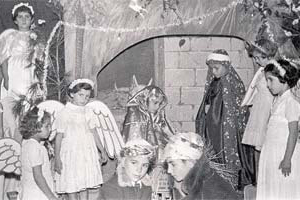
On the school stage — Children in costume in a school performance. The album groups this photograph with school life in 1955–1965; individual names are not supplied.
1955–1965 · archive caption

On the school stage

Children in costume in a school performance. The album groups this photograph with school life in 1955–1965; individual names are not supplied.

Source & credit

Αρχείο kalamoti.net.gr · Μαρία & Αργυρώ Κανάριου · Original album

Meet more people of Kalamoti →
A VILLAGE IN SIX FRAMES

Kalamoti, a little closer.

Follow the stone, the light and the details of the lanes. Open a photograph to see it without leaving the guide.

Six photographs · tap to view
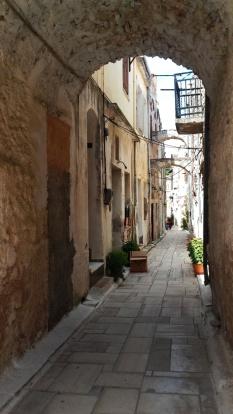
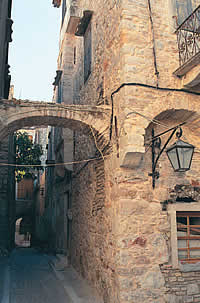
A vaulted passage opening onto a narrow lane in Kalamoti
Published in 2017

Beneath the vault

A passage frames the lane beyond. Notice the doorways, balconies and plants that share this narrow space.

Photo credit & source

S. Kossieris, O. Kourounioti, P. Agrafiotis & A. Georgopoulos · NTUA · CC BY 4.0

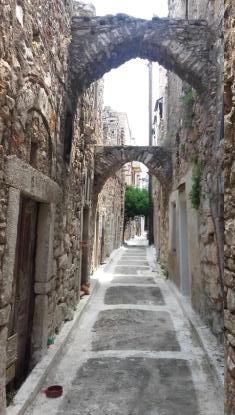
Successive stone arches above a paved lane in Kalamoti
Published in 2017

A rhythm of arches

Look up as you walk: successive arches connect the stone fronts above the paving.

Photo credit & source

S. Kossieris, O. Kourounioti, P. Agrafiotis & A. Georgopoulos · NTUA · CC BY 4.0

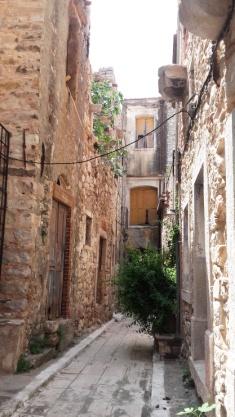
Stone house fronts, doorways and plants along a lane in Kalamoti
Published in 2017

The life between the walls

Doorways, exposed masonry and a small tree turn a passage into a place to look closer.

Photo credit & source

S. Kossieris, O. Kourounioti, P. Agrafiotis & A. Georgopoulos · NTUA · CC BY 4.0

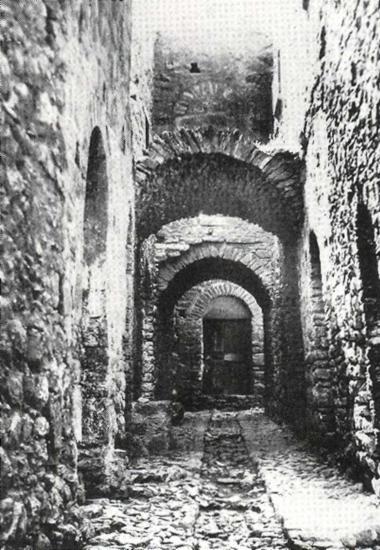
Historic black-and-white photograph of stone arches in Kalamoti, dated 1930 by the Mingei catalogue
Archive · 1930

A view from 1930

An archival view of the village’s arches. The Mingei catalogue dates its black-and-white photographs to 1930.

Photo credit & source

Mingei project / ICS-FORTH · via SearchCulture.gr · CC BY-SA 4.0

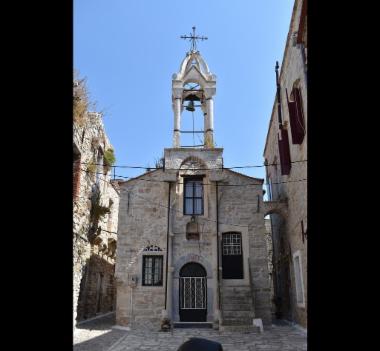
Stone church facade and bell tower between village buildings in Kalamoti
Mingei collection · undated

A bell above the lane

A stone church front rises between neighbouring buildings. The Mingei catalogue identifies the location as Kalamoti; it gives no capture date.

Photo credit & source

Mingei project · ICS-FORTH (photographer not named in catalogue) · CC BY-SA 4.0

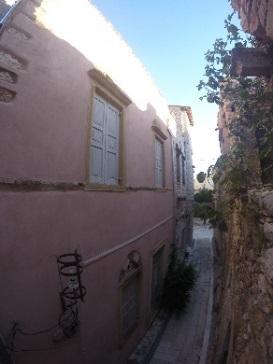
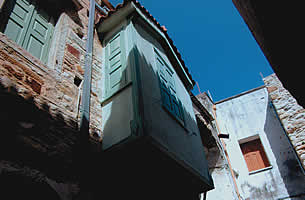
Shuttered windows and pink plaster along a narrow Kalamoti lane, photographed during the NTUA survey
Published in 2017

Colour among the stone

Shutters, coloured plaster and a glimpse of the sky. A raised camera view from the NTUA architectural survey, published in 2017.

Photo credit & source

S. Kossieris, O. Kourounioti, P. Agrafiotis & A. Georgopoulos · NTUA · CC BY 4.0

The lane photographs come from the NTUA team’s 2017 study. The church and historic arches are licensed previews from the Mingei collection on SearchCulture. Dates and sources are shown for each photograph.

BEHIND THE STONE

A village makes more sense
when you know its story.

Why were the houses built together? What connects the lanes with mastic, and the old buildings with life today? Follow seven short chapters, or begin with the question that draws you in. Each offers something to take into your visit.

01 / 07 · A shared defence

A village shaped by protection

Kalamoti’s exact foundation date is uncertain. Local historical accounts describe an enclosure formed by the outer walls of houses and two entrances: Pano Porta to the east and Kato Porta to the west, with roads leading towards the square. They record four small corner towers that no longer survive and only a small southern remnant of the perimeter wall. Read these as descriptions of the historical system, not a promise of standing gates or an intact castle to visit today.

Read the source ↗
An arch joining two sides — A stone arch spans the lane between neighbouring buildings.
Undated in the archive

An arch joining two sides

A stone arch spans the lane between neighbouring buildings.

Source & credit

Αρχείο kalamoti.net.gr · Μαρία & Αργυρώ Κανάριου · Original album

Take this into your visit

Start with the shape of the village. Notice how one house meets the next and how little space separates the fronts. The layout can tell a story even where the old towers have disappeared.

Look closer at the medieval lanes →
02 / 07 · Mastic & the wider world

1346–1566: mastic in a wider world

From 1346, the Genoese Mahona company controlled the organisation and trade of Chios mastic, until the Ottoman conquest in 1566. Research by Nikolas Bakirtzis and Xenophon Moniaros places Kalamoti among the representative fortified mastic settlements. Their study links the villages with a wider network of storage places, ports, monasteries and fortifications. This context explains why architecture here concerns both protection and production: the village belonged to an economy connected to markets far beyond the island.

Read the source ↗
Take this into your visit

As you walk, connect the protected settlement with the work beyond its walls. Mastic helps explain why these houses belong to a larger story of land, labour and trade.

Why Kalamoti became a centre →
03 / 07 · Read the stone

Architecture you can read on foot

The older houses formed a dense structure rather than isolated buildings. Arches supported spaces above streets, while upper courtyards brought light and air into the homes. Look for the relationship between passages, walls and doorways: it reveals how everyday life fitted into a limited, protected space.

Look closer: doors, windows & timber bays

The archive describes arched lintels, carved stone frames and timber doors and shutters. Earlier combinations of brick and porous stone were followed by large alternating pieces of pale and red Thymiana stone, associated in the account with the influence of the mansions of Kampos. The façade therefore records choices and changes as well as defensive construction.

Windows widened towards the interior and could include built-in seats. Small stone projections outside supported boards for flowerpots. Projecting timber bays, called sachnista or kioski, are attributed by the archive to nineteenth-century craftsmen from Chios town. A single façade can hold several periods; its photograph alone cannot date each intervention.

Read the source ↗
A face above the entrance — A carved face and ornamental relief above an arch. The archive does not name the maker or building.
Undated in the archive

A face above the entrance

A carved face and ornamental relief above an arch. The archive does not name the maker or building.

Source & credit

Αρχείο kalamoti.net.gr · Μαρία & Αργυρώ Κανάριου · Original album

Take this into your visit

Choose one doorway and look at its arch, frame and surrounding wall. Then look across the lane. What is repeated, and what changes? The archive lets you explore the interiors without entering someone’s home.

Discover the inside of the old house →
04 / 07 · A living community

The village is still lived in

Agriculture and mastic remain part of Kalamoti’s identity. Local traditions include the detos dance and a representation of the Kalamotousikos wedding during Carnival. These are community customs rather than a daily visitor programme; check locally for current celebrations and join with respect for the people keeping them alive.

Read the source ↗
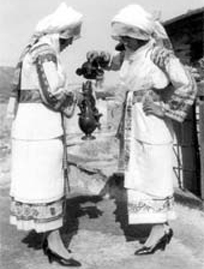
Bridal dress at a celebration — The original caption identifies women of Kalamoti wearing bridal dress at a festive occasion in 1935.
1935 · archive caption

Bridal dress at a celebration

The original caption identifies women of Kalamoti wearing bridal dress at a festive occasion in 1935.

Source & credit

Αρχείο kalamoti.net.gr · Μαρία & Αργυρώ Κανάριου · Original album

Take this into your visit

Leave time for the people behind the customs. Read about the village associations and ask locally what is happening during your stay; a celebration has its own calendar.

Meet the village associations →
05 / 07 · Beyond the lanes

History beyond the village lanes

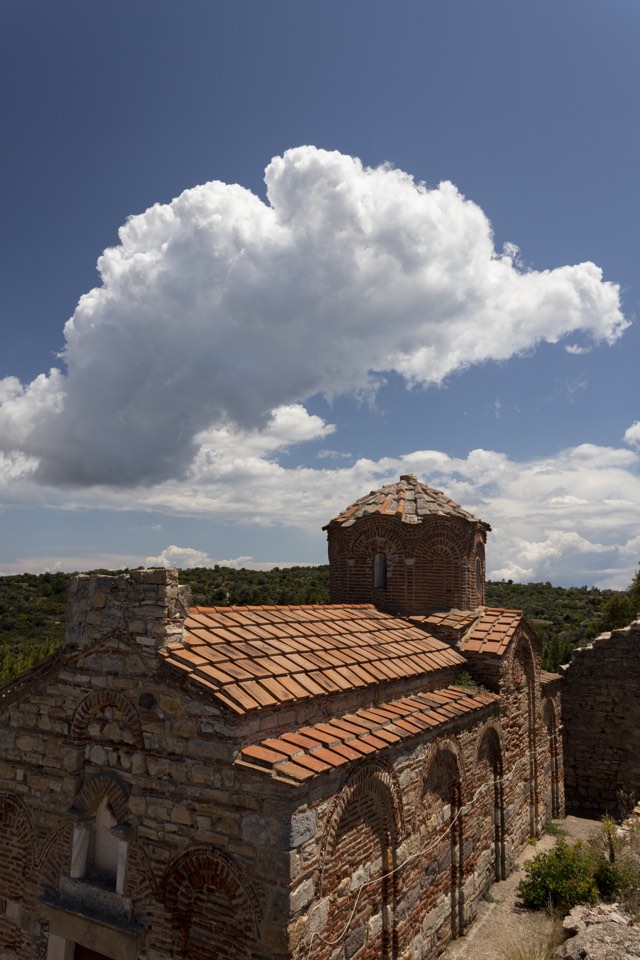
Southwest of Kalamoti, Panagia Agrelopousaina offers a close encounter with Byzantine building craft. Its dedication is to the Dormition of the Virgin. Stone and reused marble fragments show how builders worked with materials from earlier monuments. The church is a place of worship as well as an architectural landmark.

Read the source ↗
Take this into your visit

Treat Agrelopousaina as a separate countryside outing. Read the approach notes before setting off, and allow time to look at the building from outside if it is closed.

Plan a visit to Agrelopousaina →
06 / 07 · The growers’ voice

Kalamoti and the growers’ voice

Kalamoti was also a meeting place in the modern history of mastic. The Mingei heritage research project records a general assembly of growers here in summer 1915, seeking protective measures for their product. In 1932, a committee again presented its findings at an assembly in Kalamoti. These episodes preceded the compulsory cooperative system established in 1938. They reveal a village involved in collective decisions about livelihoods, alongside the cultivation and cleaning carried out within families.

Read the source ↗
Take this into your visit

A village centre is also a place for shared decisions. Let the growers’ story change how you look at Kalamoti: beyond the stone are people organising a livelihood together.

Follow the story of cooperation →
07 / 07 · The rhythm of the year

A year measured by the mastic trees

Mastic cultivation is a cycle of work that extends beyond the summer harvest. Winter care, preparing the ground, making incisions and sorting the resin bring different generations into the same practice. UNESCO inscribed this know-how on its Representative List of Intangible Cultural Heritage in 2014. The recognition concerns living knowledge and community relationships. Understanding that distinction helps visitors appreciate Kalamoti’s surroundings as a working agricultural landscape, where skills are passed on through participation and mutual help.

Read the source ↗
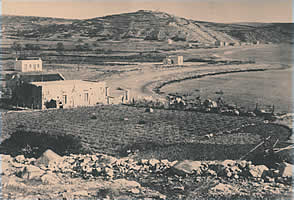
Fields towards the coast — Fields, scattered buildings and the curve of the shoreline in an undated archive view.
Undated in the archive

Fields towards the coast

Fields, scattered buildings and the curve of the shoreline in an undated archive view.

Source & credit

Αρχείο kalamoti.net.gr · Μαρία & Αργυρώ Κανάριου · Original album

Take this into your visit

The view beyond the houses is a working landscape. Enjoy it from public routes and leave trees, tools and resin undisturbed. To understand the work, begin with the stories of the people who do it.

Discover everyday life around mastic →
FROM THE COMMUNITY ALBUM

The village remembers.

Old photographs, winter music and a gift to local heritage. Public Facebook posts open a window onto village life.

Explore the memories ↗
A TRADITION WORTH CONTINUING

Some gifts become
part of a village.

Meet Kalamoti’s benefactors, discover what their gifts made possible, and find a thoughtful way to contribute today.

Benefactors & ways to help ↗
THE PEOPLE WHO BRING US TOGETHER

A village lives
through its people.

Meet Kalamoti’s associations: the neighbours, volunteers and people abroad who give village life its shared rhythm.

Discover the associations ↗
YOUR VILLAGE, ONE STOP AT A TIME

Find a place to linger.

Explore the places inside Kalamoti first. Read a story, save a stop or find it on the map. Use the area menu for countryside and coastal outings.

Explore the churches, their history and photographs →

Explore the interactive village map →

19 stops in and around Kalamoti

A stone alley with an arch and flower pots in Kalamoti village, ChiosSouth Chios · Mastic villages
History & architecture

Kalamoti

A living medieval village, where stone lanes and quiet squares open onto the fertile landscape of southern Chios.

Discover this place ↗
Panagia Sikelia church at Exo Didyma on ChiosOutside Kalamoti · Near Exo Didyma
Churches & religious heritage

Panagia Sikelia

A Byzantine church on a rural hill, reached as a separate excursion from the village.

Discover this place ↗
Komi beach on southern ChiosSouth Chios · Near Kalamoti
Beaches

Komi Beach

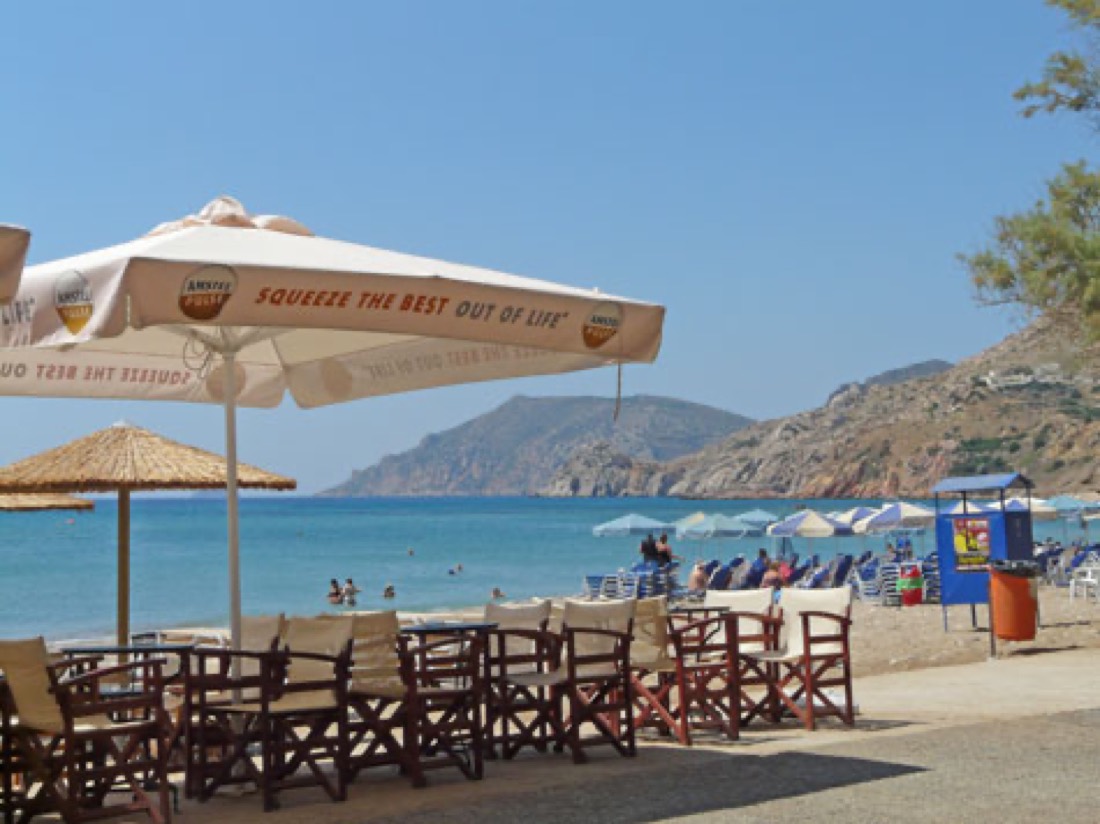
Long sandy shores, seaside cafés and an easy change of pace from the village lanes.

SandOrganised · cafés & tavernas
Discover this place ↗

“Inside the village” describes location, not step-free access. Countryside and coastal stops are separate outings. Map searches need local confirmation; church opening and reservoir access are not guaranteed.

THE EVERYDAY LIFE OF THE VILLAGE

A coffee. A table.
A reason to stay.

Leave time for the village as it is lived today. Find coffee, a meal and everyday shopping in Kalamoti. Planning time at the beach? Find Komi’s coastal businesses in the same guide.

MAKE THE VILLAGE YOUR HOME

Some places deserve
more than a day.

Wake up behind stone walls. Step out into the lanes. Discover traditional village houses listed on Airbnb, and settle into Kalamoti’s rhythm.

Find your village stay ↗
YOUR KALAMOTI, TOO

A place lives through the stories we share.

A walk you loved, a family memory, a photograph worth keeping. Send your experience to help others discover the village through your eyes.

Share a story or photo →
FROM THE OLDER KALAMOTI ARCHIVE

The stones. The tools.
The people.

Twenty-four archive photographs connect the architecture with the work and celebrations of village life. Explore the xato, carved openings, household crafts and school photographs from 1955–1965.

Explore the illustrated archive ↗
Looking up at the timberwork — The underside and projecting sides of a wooden bay, photographed from the street.On the school stage — Children in costume in a school performance. The album groups this photograph with school life in 1955–1965; individual names are not supplied.

Your saved places

Put your stops in the order you want to visit. Copy the list or download it to keep the names and links with you.

Saved in this browser. The downloaded text file works offline; opening guide pages and maps needs a connection.

KALAMOTI.GR

Find your way.

A vaulted passage opening onto a narrow lane in Kalamoti

·

KALAMOTI · READING ROOM

A short presentation by the Kalamoti guide, based on the cited sources.

Stay here to read; close this window to continue where you left off.