 Kalamoti · Historic centre
History & architecture
Medieval lanes & Platsa
Read the village through its arches, stone façades and closely connected houses.
Discover this place ↗A living medieval village, where stone lanes and quiet squares open onto the fertile landscape of southern Chios.
Directions from Kalamoti ↗Suggested seasons: Spring, Summer, Autumn, Winter
A stone alley with an arch and flower pots in Kalamoti village, Chios · Ailinaleixo · CC BY-SA 3.0
Kalamoti preserves traces of its fortified past. Begin with a walk through the village, then follow the road across the plain towards Komi and the sea.
Explore on foot, respecting residential doorways and quiet hours.
From the square, choose one lane and follow the way houses meet above and beside it. Where does the street feel open, and where does it become a passage?
Return to the centre after your walk. A coffee or a conversation gives the stone buildings a present-day context.
Choose the little church loop for a compact introduction, or the wider village loop to include the memorial. Both return to Platsa; their maps show the stops in order.
These routes start at the Platsa meeting point; this place is part of the surrounding square and lanes.
Kalamoti · Historic centreRead the village through its arches, stone façades and closely connected houses.
Discover this place ↗A quiet church stop within the village, best approached as part of a walk through the lanes.
Discover this place ↗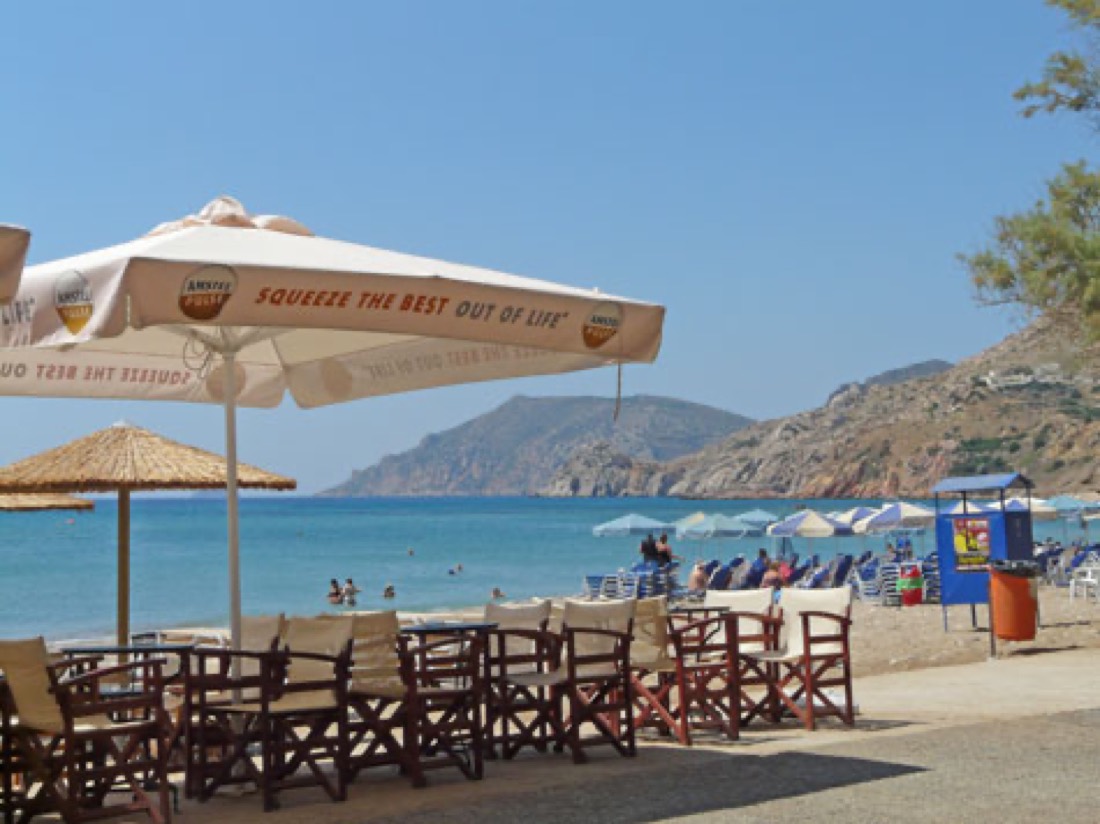 South Chios · Near Kalamoti
Long sandy shores, seaside cafés and an easy change of pace from the village lanes.
Continue your walk by looking for contrasting doorways, repairs and passages. Read the architectural history before deciding what belongs to which century.
The 1881 earthquake and subsequent rebuilding changed Kalamoti. Chios’s official guide identifies later influences from Chios Town and Kampos in doors and windows. Look at the village as a succession of building periods: the medieval layout survives alongside later choices, repairs and additions.
Chios Travel Guide ↗