Giving care a place of its own
A community clinic for Kalamoti and its neighbouring villages.
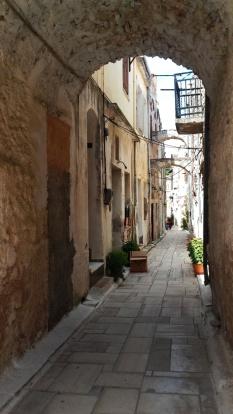
Photo credit & licence
S. Kossieris, O. Kourounioti, P. Agrafiotis & A. Georgopoulos · NTUA · Catalogue / original · CC BY 4.0
“residents of neighbouring villages”
The life behind the name
Born in Kalamoti in 1906, Nikolaos Choulis worked in Athens and built a business career. The local biographical account connects his contribution with a basic need: access to care.
He funded the construction and equipment of a community clinic. Work began in 1947 and finished in 1949. Known as the Chouleio Hospital, the building was intended to serve people from Kalamoti and neighbouring villages.
The published account describes both construction and equipment. That distinction matters: the intended gift was a place prepared for care, rather than an empty building awaiting its purpose.
The local account describes five rooms and a basement. Those modest dimensions help a reader picture the scale of the project. Its significance lay in setting aside a dedicated place for care in a village whose needs were shared with the surrounding settlements.
A life and its legacy
- 1906Born in Kalamoti
- 1947Clinic construction begins
- 1949Construction completed
- 1966Dies in Athens
From paint sales to a village clinic
Choulis moved to Athens at twenty. The local account traces his path from employment to selling paint for VIVECHROM, opening a paint shop and later working in metal-furniture production. This is the economic background to the clinic donation: a business built away from Kalamoti helped provide a place intended for care at home.
The account explicitly includes residents of neighbouring villages among the intended beneficiaries. That wider reach deserves emphasis. Kalamoti appears here as a place serving a surrounding community, through a practical institution people needed. It is one reason to read the village’s importance through services and relationships alongside architecture. The building’s later uses require their own history, and its historic name should not be read as a description of medical facilities available today.
A building with more than one public role
The January 2012 account says the community office had occupied space in the Chouleio building from 1954. That later administrative use broadens its history beyond the original clinic. It is a historical report, not a current directory of services.
Read the documented account ↗Read the clinic’s original account
The 2012 local publication records the donor’s working life, the construction period and the intended use of the building.
Open original in the guide ↗Greek-language source. The publisher’s page loads only after you choose to open it.Beyond the walls of a clinic
The importance of a clinic is best understood from the visitor’s side of its door. For someone seeking help, a building is one part of a wider service: people, equipment and reliable arrangements are also needed. Choulis’s gift makes room in this journal for health as a shared concern. It also reminds us to distinguish a historic donation from the continuing work needed to provide care. A commemorative name alone cannot describe that whole system.
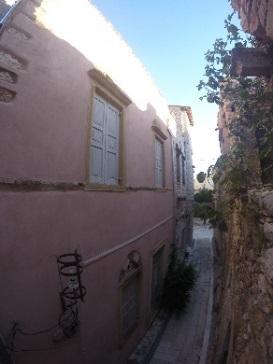
Photo credit & licence
S. Kossieris, O. Kourounioti, P. Agrafiotis & A. Georgopoulos · NTUA · Catalogue / original · CC BY 4.0
Care as a reason to stay
For anyone imagining a life in Kalamoti, this history raises a practical question alongside the beauty of the stone houses: how does a community care for its residents? Choulis’s contribution puts that question at the centre of the village story. A place to live is also a place in which people need support through illness, age and changing circumstances. Use the living guide to find current official contacts when planning a longer stay; the historical clinic account does not establish today’s services.
Why does the clinic matter beyond Kalamoti?
The published account includes neighbouring villages in its purpose. It connects Kalamoti’s regional role with the everyday need for care.
A village that served its neighbours
Begin at the centre and read the living guide alongside the biography. The suggested stop is the shared village setting, not a verified clinic entrance or appointment location.
Read the evidence, follow the memory
The life and dates above follow the published accounts below. The reflections on their meaning are our editorial reading. Reviewed 3 November 2026.
About the evidence
Construction dates come from the local account published in 2012. Historical descriptions of the clinic are not presented as verified information about current healthcare provision.
What does your family remember?
An exterior photograph, building document or public ceremony programme could help document this story. Please do not send medical records or identify patients.
Share a memory or photograph ↗Contributions are reviewed before publication.