Giving the village a history to return to.
Books, photographs and recorded events help a community remember beyond one generation. Meet an educator who made that work part of his connection with Kalamoti.
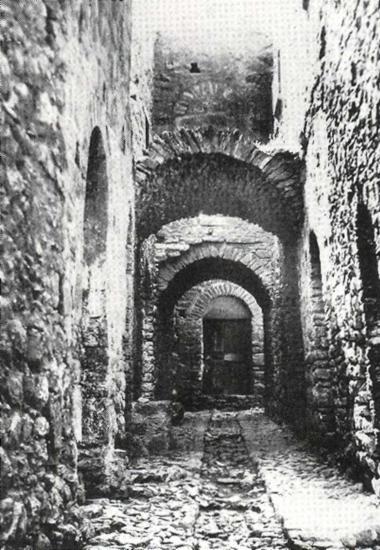
Photo source & credit
Mingei project / ICS-FORTH · via SearchCulture.gr · Catalogue / original · CC BY-SA 4.0
The life behind the name
Georgios I. Damalas’s January 2007 profile records his origins in Kalamoti, physics studies and postgraduate research in London. His 400-page history of Kalamoti appeared in 1989 and received an Academy of Athens commendation. The profile also credits him with association albums and recording events with Christos Arampatzis.
The value of a local history is partly in the questions it allows us to ask again. A named source lets a visitor trace a claim, a family correct a detail and a later researcher return to the evidence.
A life and its legacy
- 1989Village-history book published
- 1993–1995Presidency of the Attica association
- 1997–1999A further presidential term
- 2007Date of the published profile used here
Remembering from a distance
The profile records two terms leading the association of Kalamotians in Attica, in 1993–1995 and 1997–1999. Editing albums and recording events provided ways to sustain a connection with the village beyond residence there.
For a visitor, this changes the meaning of a village archive. Its material may be gathered in several places and held by different people. Following an author, association or photographer can reveal connections that a walk through the streets alone would miss.
The village remembers, in photographs
Explore the illustrated report of the August 2014 ceremony: the unveiling of Vamvakas’s bust, the speakers and the gathering around it. The original photographs remain with their publisher.
Open original in the guide ↗Greek-language source. The publisher’s page loads only after you choose to open it.A book is a beginning
A village history can bring scattered material within reach. It also reflects the sources available when it was written. Read it with a notebook: which events are dated, whose voices appear, and where might a school record, photograph or family letter add another perspective? Respect for an earlier work includes keeping its questions open.
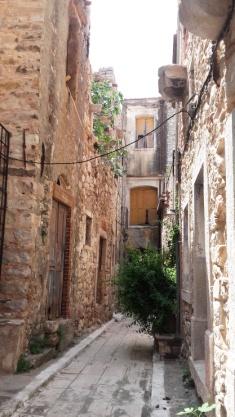
Photo source & credit
S. Kossieris, O. Kourounioti, P. Agrafiotis & A. Georgopoulos · NTUA · Catalogue / original · CC BY 4.0
Recording the people around the ceremony
An event album can preserve more than its principal speaker. The audience, organisers, programme and date help a later reader understand who met and why. When contributing your own material, include these ordinary details. A carefully described photograph can connect a public occasion with the quieter work of preparing it.
Why does the date of a biography matter?
Words such as “today” belong to the time of publication. A 2007 profile can document earlier work without establishing someone’s present role. This guide keeps that distinction visible.
Take a question into the lanes
Choose one detail on your walk—a passage, a doorway or a place name. Photograph it respectfully and note your question before seeking an answer in the village archive.
Read the evidence, follow the memory
The life and dates above follow the published accounts below. The reflections on their meaning are our editorial reading. Reviewed 3 November 2026.
About the evidence
This portrait uses a profile dated January 2007. Its employment and association roles are historical information, not verified current appointments. No family relationship with Angeliki Damala is inferred from the surname.
What does your family remember?
Do you have an association programme, a captioned event photograph or a correction supported by a document? Include the date and source so another reader can follow it.
Share a memory or photograph ↗Contributions are reviewed before publication.