 South Chios · Mastic villages
History & architecture
Kalamoti
A living medieval village, where stone lanes and quiet squares open onto the fertile landscape of southern Chios.
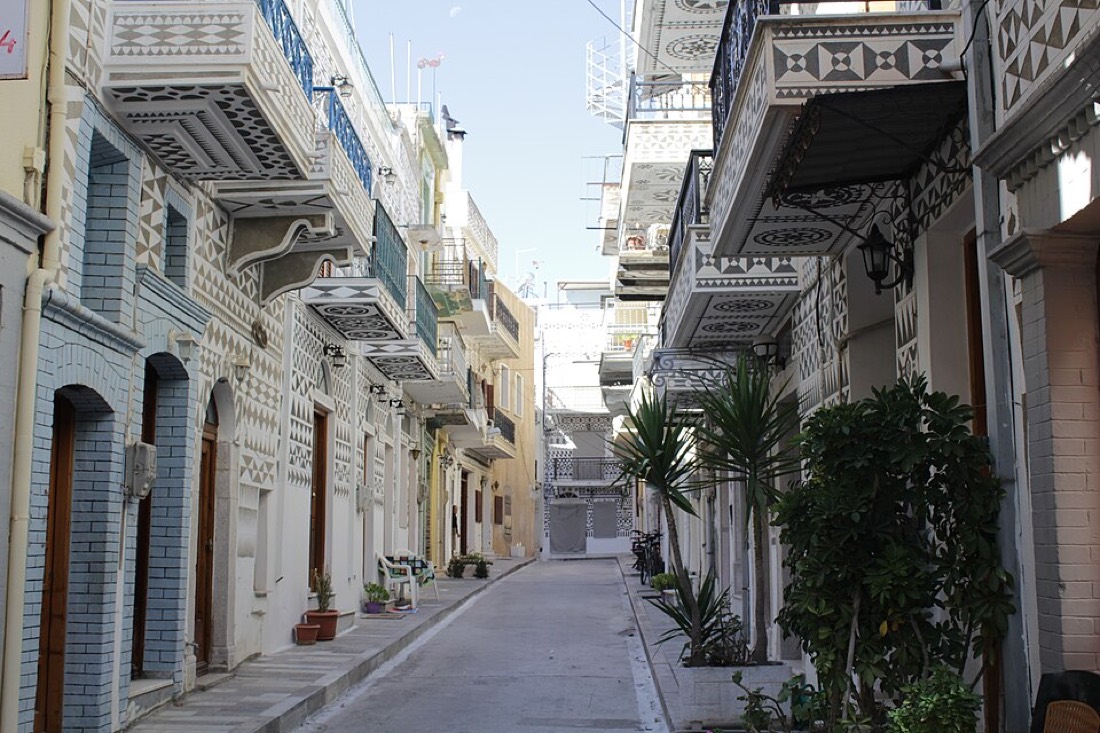
Discover this place ↗A village of extraordinary patterns: black-and-white xysta decorate façades around medieval lanes.
Directions from Kalamoti ↗Suggested seasons: Spring, Summer, Autumn, Winter
 View photograph ↗
Decorated building facades in Pyrgi, Chios · Eva-tzi · CC BY-SA 4.0
Pyrgi’s geometric decoration gives the village its unmistakable character. Look beyond the façades to discover its defensive layout and the Byzantine church of Agioi Apostoloi.
Ask before photographing residents or entering church interiors.
Choose one street to explore slowly instead of searching only for the most photographed façade. Compare the patterns, look at the openings and give the square a place in your visit. Pair Pyrgi with the Mastic Museum for a day that connects village architecture with the work of the surrounding countryside.
Continue the story with one of these places. Check the setting and access notes before adding a stop to your day.
South Chios · Mastic villagesA living medieval village, where stone lanes and quiet squares open onto the fertile landscape of southern Chios.
Discover this place ↗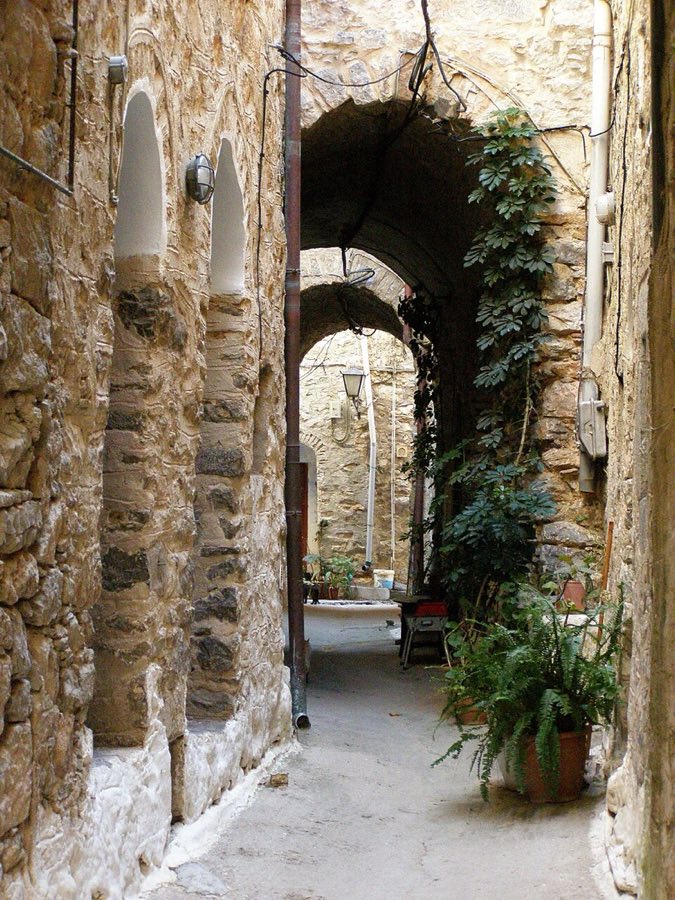 Southwest Chios · Mastic villages
Step into a village built like a fortress, with interlocking stone houses and sheltered passages.
Discover this place ↗A hillside village under a medieval castle, and a starting point for discovering the island’s northwest.
Discover this place ↗
Bring this visit back to Kalamoti’s story of growers and collective organisation. Compare what each place reveals about the mastic landscape instead of treating the villages as interchangeable stops.
The growers’ union dates the creation of the compulsory cooperatives and their union to 1938, with operations beginning in 1939. Growers’ harvests could then be gathered, processed and marketed through a common organisation. This wider Mastichochoria story helps explain why the mastic year involves more than work beneath a tree.
Chios Mastiha Growers Association ↗