Pyrgi
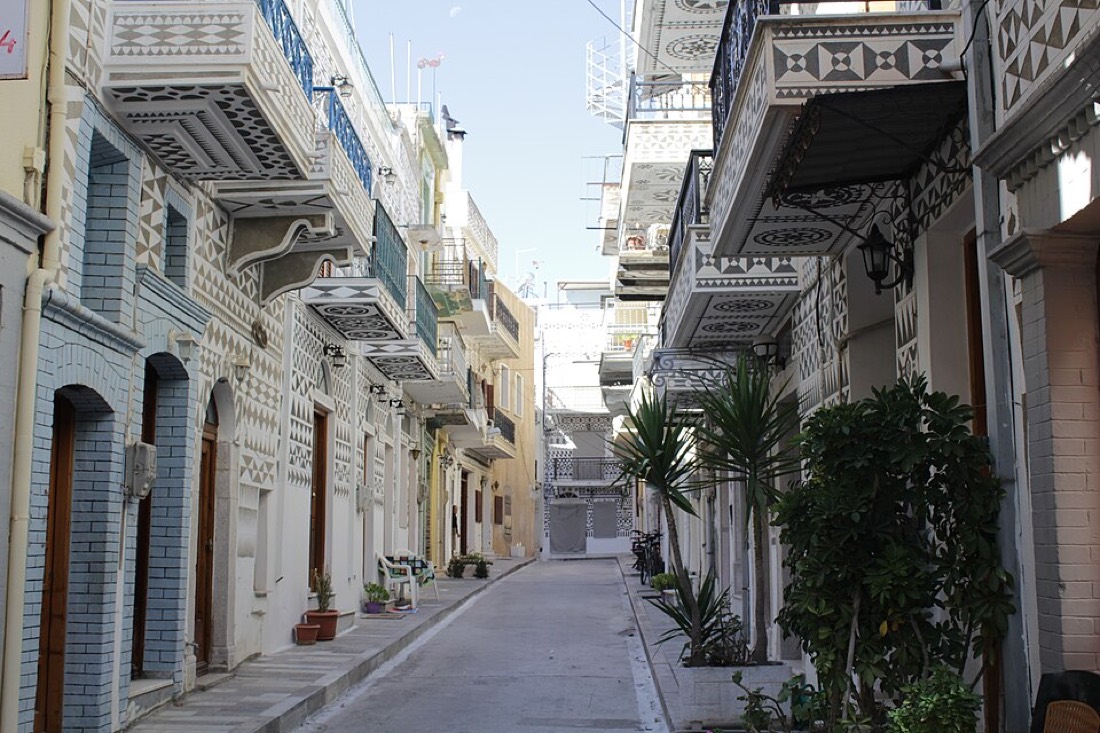
A village of extraordinary patterns: black-and-white xysta decorate façades around medieval lanes.
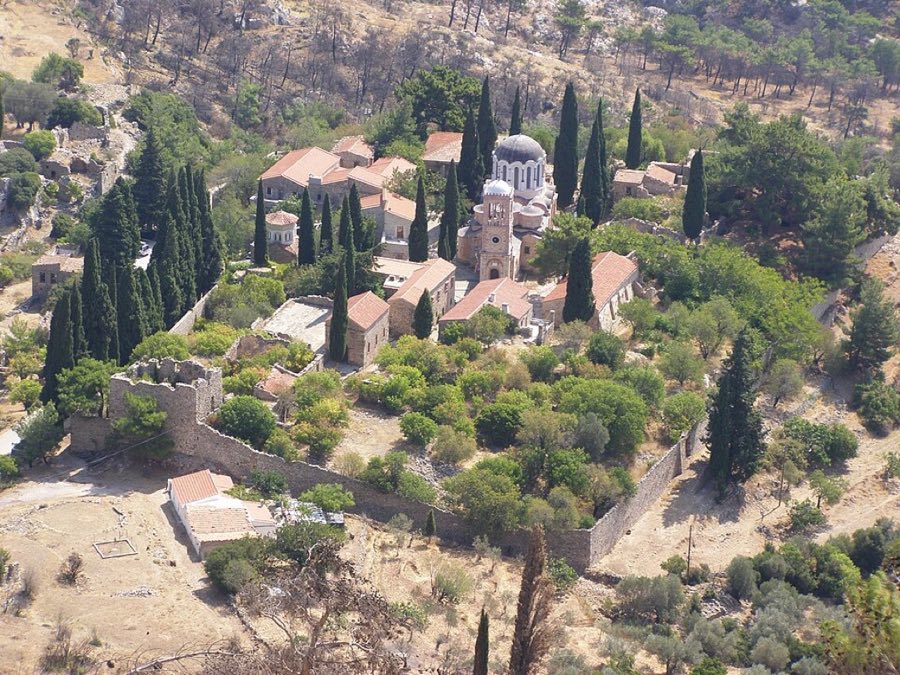
Brickwork and painted history within the medieval village of Pyrgi.
This opens a named area search, not a verified visitor pin. Confirm the result and approach locally.
Suggested seasons: Spring, Summer, Autumn, Winter
 View photograph ↗
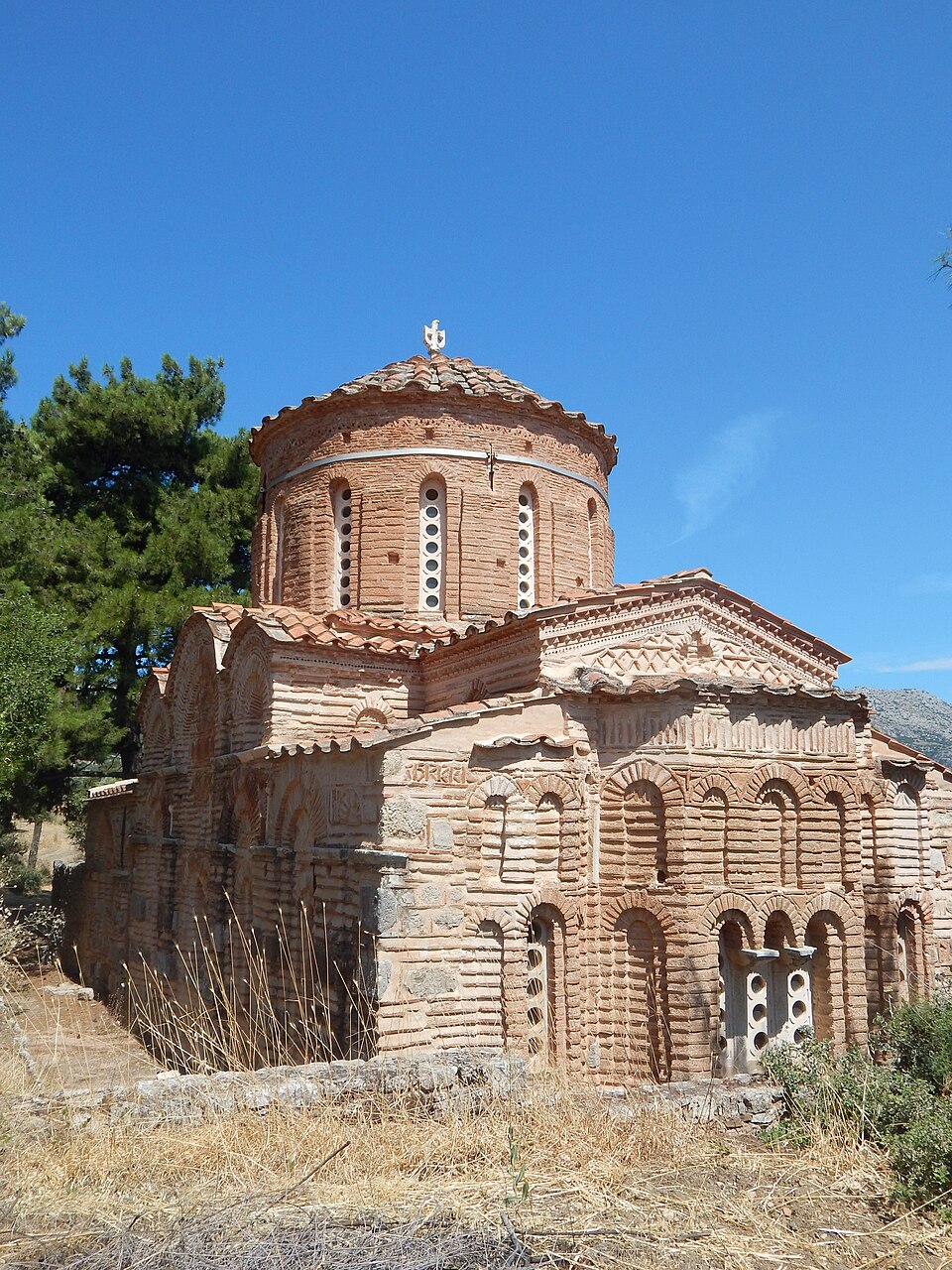
The church of the Holy Apostles at Pyrgi, Chios · Lunar sea n · CC BY-SA 4.0
The Chios guide relates an entrance inscription to Symeon and the year 1564, interpreting it as a probable renovation of an older church. It attributes the wall paintings to Antonios Domestichos, Kenygos, in 1665. These dates describe different phases, rather than a single building campaign.
Combine with a visit to Pyrgi. Confirm current entry arrangements with the Ephorate of Antiquities; this church is not part of a Kalamoti walking loop.
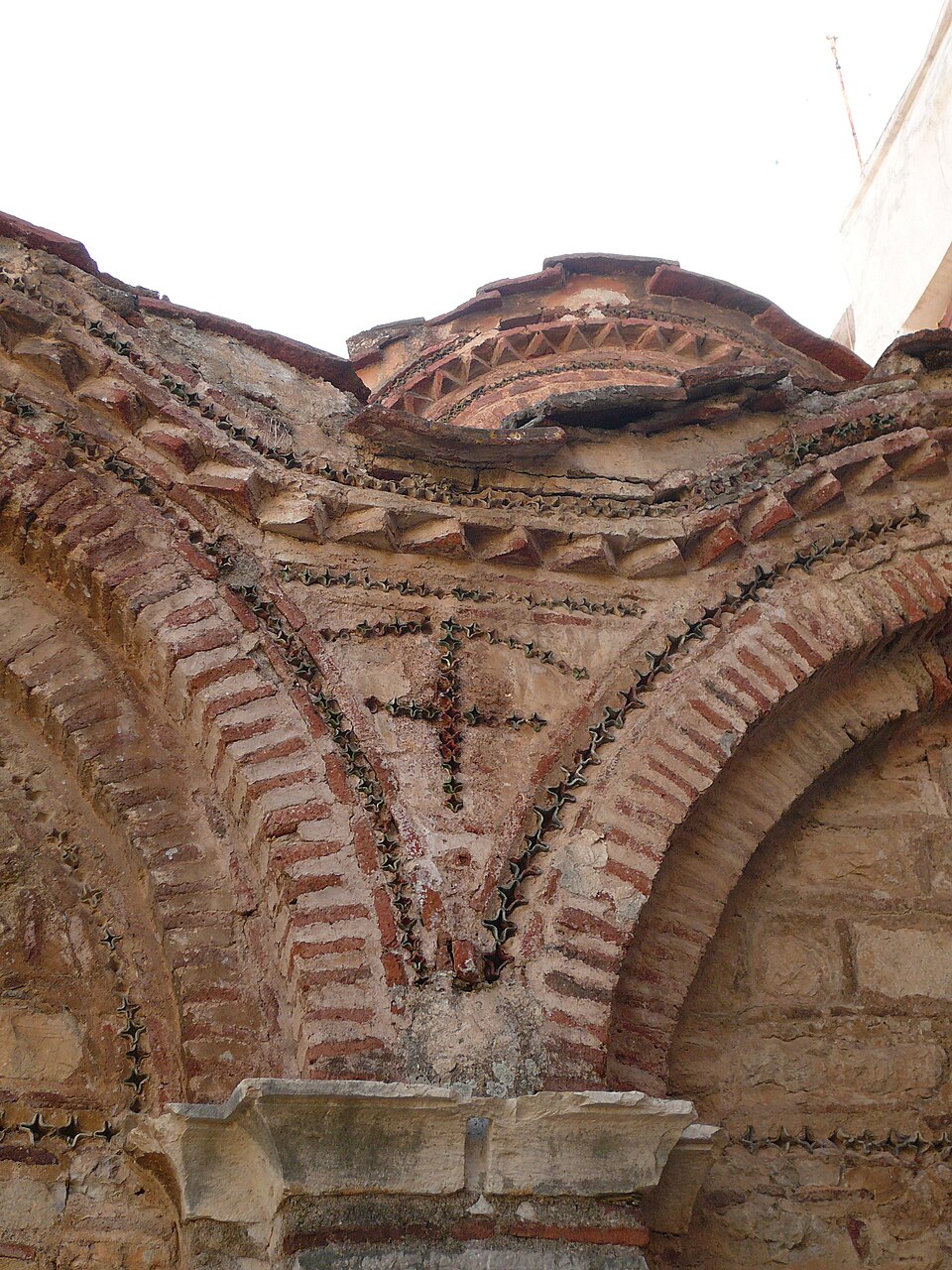
Look for the small openings and repeating brick patterns in the masonry. Compare the detail photograph with the wider view, then explore the village streets at your own pace.
Choose one detail to remember and compare it with the next church you visit. Ask before photographing an interior.
This is an additional place guide. It has no numbered stop on the current loops; confirm its location and access separately.
 Enlarge ⤢
Photograph of the church in Pyrgi. Select to enlarge.
Lunar sea n · CC BY-SA 4.0A village of extraordinary patterns: black-and-white xysta decorate façades around medieval lanes.
A domed Byzantine church near Vavili, for a separate island excursion.
A Byzantine landmark in the island’s interior, known for its remarkable medieval mosaics.

The 1881 earthquake and subsequent rebuilding changed Kalamoti. Chios’s official guide identifies later influences from Chios Town and Kampos in doors and windows. Look at the village as a succession of building periods: the medieval layout survives alongside later choices, repairs and additions.
Chios Travel Guide ↗