 Kalamoti · Historic centre
History & architecture
Medieval lanes & Platsa
Read the village through its arches, stone façades and closely connected houses.
Discover this place ↗Meet the resin, the trees and the people behind the island’s most celebrated tradition.
Directions from Kalamoti ↗Suggested seasons: Spring, Summer, Autumn, Winter
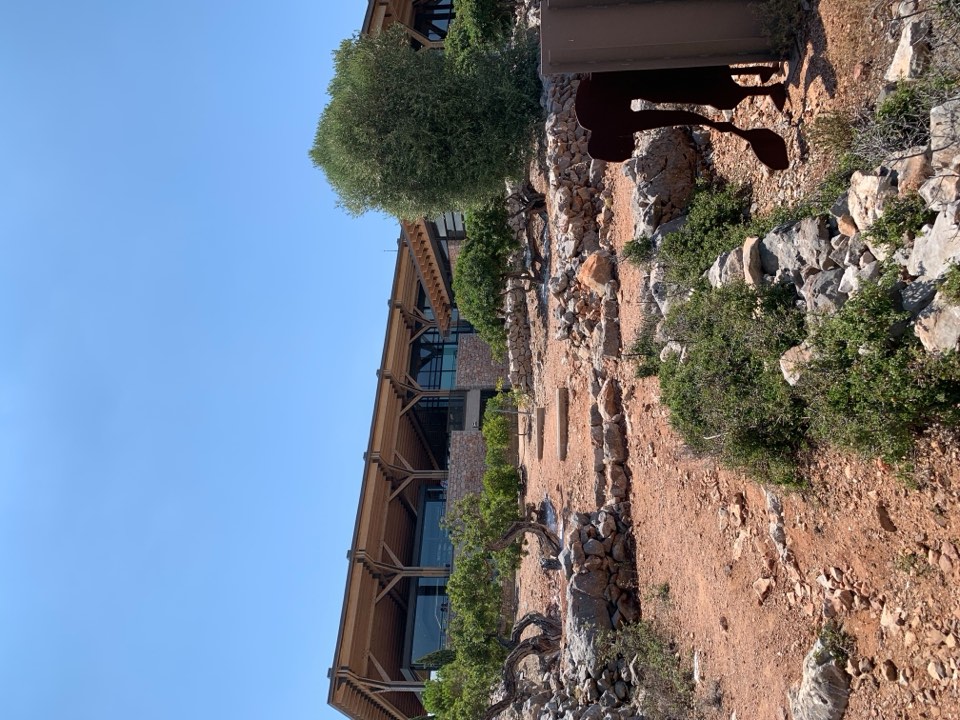
The Chios Mastic Museum building and outdoor mastic garden · Robot8A · CC BY-SA 4.0
The museum explores mastic cultivation and its relationship with the villages of southern Chios. Indoor exhibits and an outdoor planting connect the story to the landscape.
Check the museum’s official page for opening days, tickets and accessibility details.
Visit with a question in mind: how does resin from a tree become a village livelihood? Follow the work, tools and organisation behind the product, then return to Kalamoti’s account of growers’ assemblies. With children, choose a few objects to discuss together. Check the museum’s current hours before planning the rest of the day around it.
Kalamoti · Historic centreRead the village through its arches, stone façades and closely connected houses.
Discover this place ↗A small Byzantine church in the countryside southwest of Kalamoti.
Discover this place ↗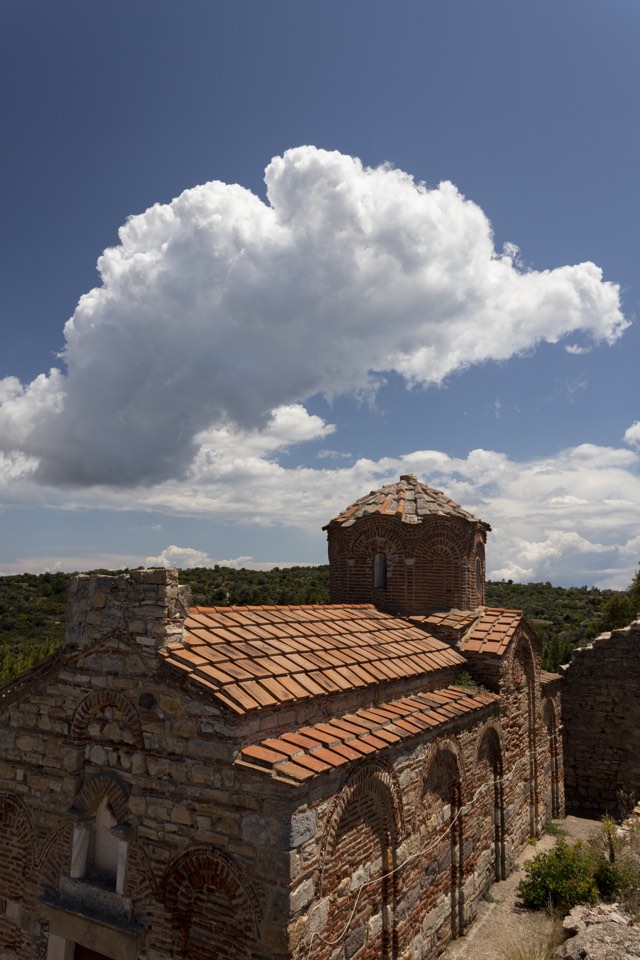 Outside Kalamoti · Near Exo Didyma
A Byzantine church on a rural hill, reached as a separate excursion from the village.
Discover this place ↗Bring this visit back to Kalamoti’s story of growers and collective organisation. Compare what each place reveals about the mastic landscape instead of treating the villages as interchangeable stops.
The growers’ union dates the creation of the compulsory cooperatives and their union to 1938, with operations beginning in 1939. Growers’ harvests could then be gathered, processed and marketed through a common organisation. This wider Mastichochoria story helps explain why the mastic year involves more than work beneath a tree.
Chios Mastiha Growers Association ↗